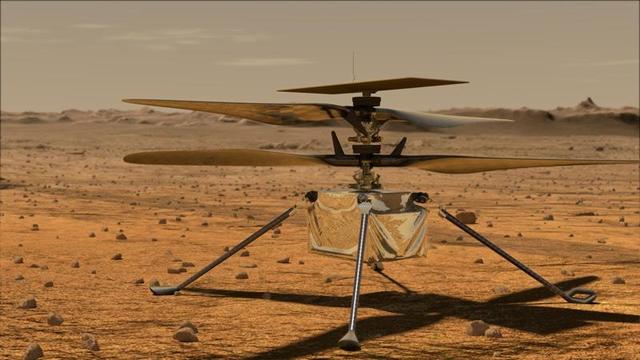
NASA and JPL continue to work towards the first flight of the Injenuity Helicopter on Mars. That flight will take place no earlier than April 14. Engineers are at work testing out the helicopter's systems to make sure everything is go before the first flight attempt.
Article: #CountdownToMars Social - NASA.gov
NASA has been hosting in-person get-togethers for a decade now. During these times, however, they are doing them online, and it's easy to participate.
Just go to their Facebook page: #CountdownToMars Virtual NASA Social Answer a few questions, and get approved. You will then be able to participate. This is a great opportunity to be part of the historic launch later this month, when the Mars 2020 Perseverance Rover will launch on its mission to the red planet.
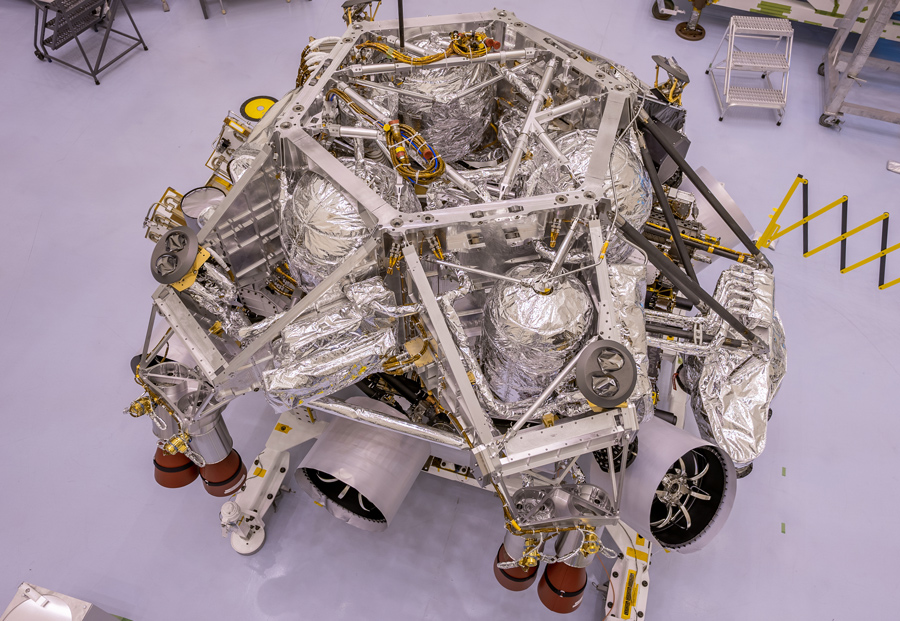
A new webcam allows you to watch the NASA 2020 rover being built.
Also, webchats will occur Mon.-Thu. at 11 a.m. and 4 p.m. PDT (2 p.m. and 7 p.m. EDT), with additional moderated chats when special activities (like drive tests) occur.
Shortly, NASA will be discussing the scientific findings made when Comet Siding Spring came within 87,000 miles of Mars on October 19. Instruments from three craft in Mars orbit, MAVEN, MRO and ESA's Mars Express all contributed data. Five experts will be on hand to discuss what they found.
The three NASA Orbiters circling Mars gave "thumbs up" after their close encounter with Comet Siding Spring yesterday. The comet came within 87,000 miles of Mars on Sunday. It was the kind of event that only happens once every million years.
NASA's Mars Reconnaissance Orbiter, Mars Odyssey and Mars Maven are all signaling as healthy. They were parked on the far side of the encounter to protect them. Many instruments were used to document the encounter, and photos and data should be available in a few days!
Comet Siding Spring will come within 87,000 miles of Mars on Sunday. This kind of event only happens once every million years. So, scientists are very eager to get a good look at the comet with those satellites orbiting Mars. They are curious to see what impact the particles from the comet might have on the thin atmosphere of Mars. The comet is thought to be about 4.6 billion years old. This would make it almost as old at the solar system itself.
Today, at NASA's Michoud Assembly Facility in New Orleans, the largest spacecraft welding tool in the world opened. The Vertical Assembly Center, a 170-foot-tall, 78-foot-wide assembly, completes a welding apparatus that will be used to build the core stage of America's next rocket, the Space Launch System (SLS).
SLS will have the capability for deep space missions, including going to an asteroid and eventually Mars. The core stage will be more than 200 feet tall with a diameter of 27.6 feet. It will store cryogenic liquid hydrogen and liquid oxygen that will feed the rocket's four RS-25 engines.
"This rocket is a game changer in terms of deep space exploration and will launch NASA astronauts to investigate asteroids and explore the surface of Mars while opening new possibilities for science missions, as well,” said NASA Administrator Charles Bolden during a ribbon-cutting ceremony at Michoud Friday.
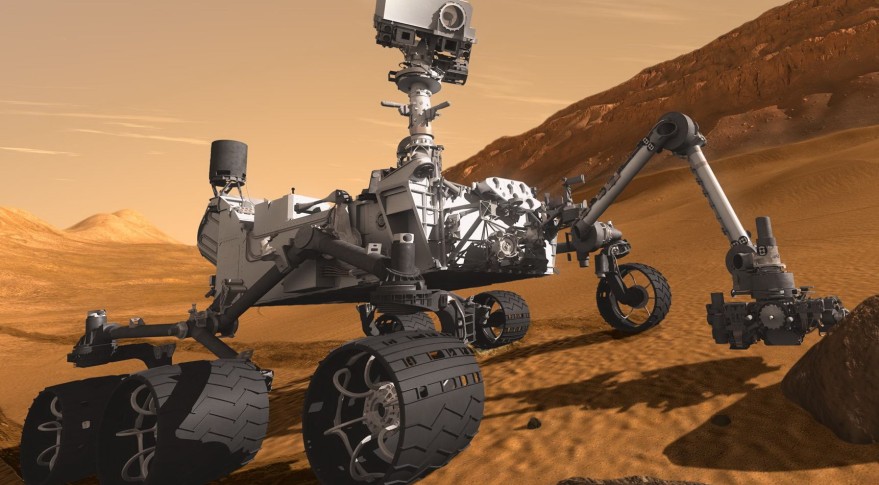
NASA is working on plans for its Mars 2020 Rover. It is based on the design of the Curiosity rover, which landed in 2012 and is still going strong!
There is an array of instruments on board. The one that strikes me as coolest is the MOXIE, Mars Oxygen In-situ resource utilization Experiment. It will attempt to do what people hoping for a manned mission have been wanting: a device that takes in Mars' carbon dioxide, and produces oxygen. If successful, this would accomplish a task that would help astronauts live on Mars.
There are plenty of other instruments that will be onboard. So, read the article and see which one is your favorite!



:max_bytes(150000):strip_icc():format(webp)/GettyImages-667727296-5945095e5f9b58d58a16c694.jpg)